


Scorching Risks and Vital Safeguards: Potch Braces for Fire Season
- Karen Scheepers

- 2 hours ago
- 3 min read
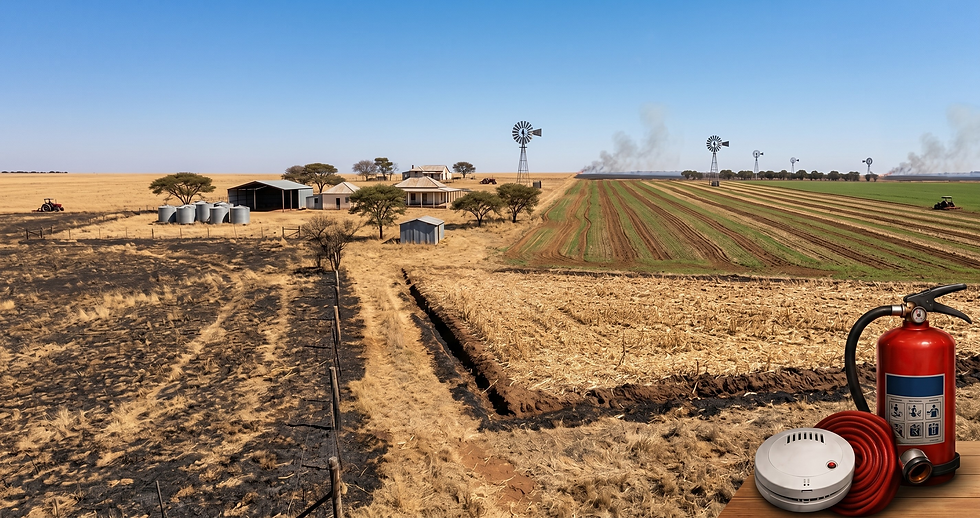
With the onset of the fire season in Potchefstroom, local authorities and first responders have issued comprehensive safety frameworks to mitigate risks in both residential areas and expansive agricultural sectors. Seasonal weather patterns, characterized by high temperatures, low humidity, dry vegetation, and strong winds, significantly elevate the vulnerability of the region to devastating blazes. To promote community readiness, detailed protocols have been structured to address the distinct challenges faced by households and landowners alike.
Domestic Fire Prevention: Safeguarding Households
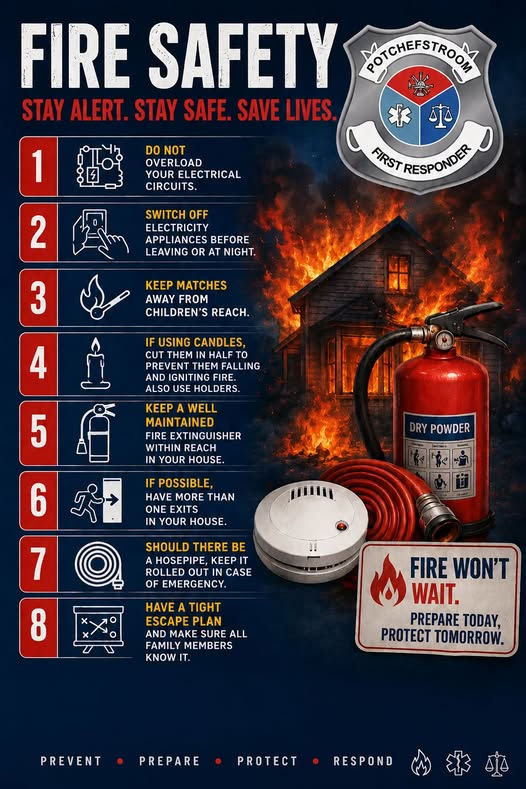
In residential zones, safety campaigns emphasize proactive household habits and structural preparedness. According to local emergency frameworks, key preventative measures include managing electrical loads and securing open flames. Residents are urged to avoid overloading electrical circuits and to systematically switch off appliances before leaving the property or retiring for the night.
Furthermore, household ignition sources require strict oversight. Matches and lighters must remain entirely out of reach of children. When utilizing candles, safety guidelines recommend cutting them in half to lower their center of gravity and prevent tipping, alongside utilizing stable, designated holders.
In terms of emergency readiness, the guidelines highlight three essential pillars:
Equipment Maintenance: Keeping a well-maintained, dry-powder fire extinguisher easily accessible within the home, alongside an available hosepipe rolled out for rapid deployment.
Structural Planning: Ensuring residential properties possess more than one clear exit wherever possible.
Coordination: Establishing a tight, well-rehearsed family escape plan so all household members can evacuate efficiently during a crisis.
Veld and Field Fires: Protecting the Agricultural Frontier
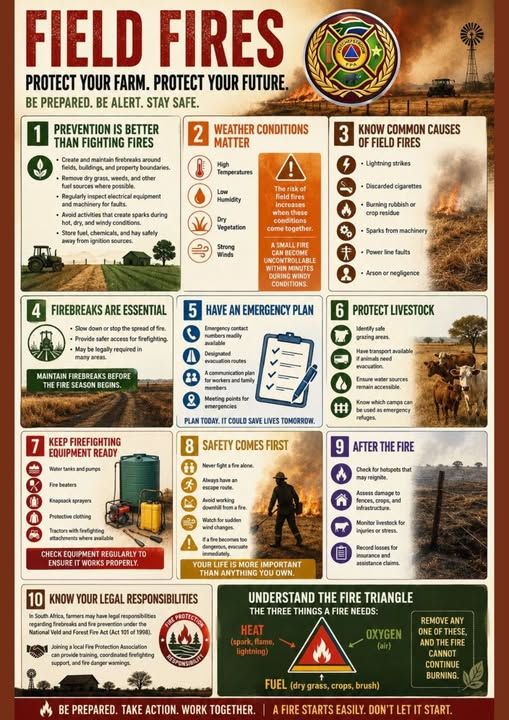
For Potchefstroom’s agricultural community, managing field fires requires compliance with legal frameworks, specifically the National Veld and Forest Fire Act (Act 101 of 1998) in South Africa. Landowners are encouraged to join local Fire Protection Associations (FPAs) to access coordinated firefighting support and accurate fire danger warnings.
Managing rural vulnerabilities involves understanding the "Fire Triangle", the intersection of heat, oxygen, and fuel. Since weather conditions can transform small sparks into uncontrollable blazes within minutes, the following strategic practices are highly recommended:
Firebreaks and Fuel Management: Establishing and maintaining strategic firebreaks around fields, buildings, and boundaries before the fire season peaks is essential. Removing dry grass, weeds, and heavy crop residue reduces the fuel load available to a fire.
Equipment Readliness: Farmers are advised to regularly inspect electrical machinery for faults and keep dedicated firefighting equipment—such as water tanks, pumps, fire beaters, knapsack sprayers, and tractor attachments—fully operational.
Livestock Protection: Strategic emergency planning includes identifying safe grazing areas, ensuring accessible water sources, and maintaining transport vehicles ready for animal evacuation to designated emergency refuges.
Emergency Response and Post-Incident Protocols
Whether in a residential or rural setting, emergency plans dictate that human life must always take precedence over property. If a fire becomes unmanageable, immediate evacuation via pre-designated routes is critical. For those dealing with field blazes, safety protocols advise never fighting a fire alone, maintaining a clear escape route, avoiding working downhill from an advancing fire, and monitoring sudden wind shifts.
Once a fire has been suppressed, the danger does not immediately pass. Post-fire protocols require a thorough inspection of the area to check for concealed hotspots that could reignite. Additionally, stakeholders must assess structural and fence damage, monitor livestock for injuries or smoke-induced stress, and carefully document all losses to facilitate insurance and assistance claims.
As environmental conditions shift, the collective adherence to these structured safety guidelines remains the primary defense for Potchefstroom's residents and farmers. Through individual accountability, regular equipment maintenance, and robust community coordination, the region aims to minimize the ecological and economic impacts of the fire season.
🔥👩🚒🚒🚜🏠🌾



Comments