


The Emerald Corridor: Oak Avenue and the Botanical Sanctuary

Updated: Apr 10
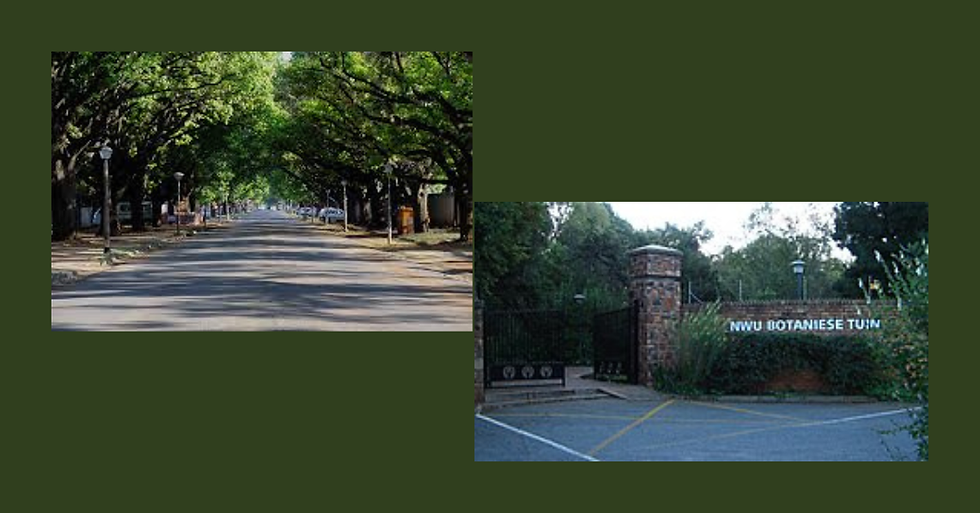
Potchefstroom is defined by a unique botanical heritage that is most visible in its Oak Avenue, a 6.84 kilometer stretch of oak trees that is recognized as the longest of its kind in the Southern Hemisphere. The avenue, which comprises Chris Hani Drive, Kock Street, Dr Beyers Naudé Avenue, and several other major thoroughfares, contributes significantly to the city’s aesthetic "dignity and character".
The inception of this green corridor dates back to 1910, following a decision by the Town Council led by B.R. (Reuben) Gericke. Gericke, who supervised the planting, was motivated by a desire to enhance the route he traveled daily to the Agricultural College, leading to the planting of over 700 trees along a path stretching from the Lakeside Resort to the city's agricultural hub.

The maintenance of this living monument has faced severe environmental and infrastructural challenges. Historically, the trees thrived because of the town's furrow irrigation system, which provided consistent groundwater. However, the cessation of this system in 1972, combined with the extensive paving of sidewalks and the installation of modern storm water systems, has deprived the trees of essential moisture.
This has led to a noticeable decline in the health of the oaks since 1980, with the population shrinking to approximately 530 trees. Threats have further intensified with the arrival of pests like the Polyphagous Shot Hole Borer (PSHB) and the Asterolecanium quercicola scale insect, leading to community-led initiatives such as the Oak Avenue Interest Group, which focuses on stabilizing the avenue and planting new saplings.
Botanical Asset | Species/Theme Count | Key Function |
Oak Avenue | ~530 English Oaks | National Monument; aesthetic and historical corridor. |
NWU Botanical Garden | >1,500 Species | Conservation, student research, and community education. |
Tropical Greenhouse | Orchid Family focus | Housing frost-tender epiphytic and exotic species. |
Succulent Rockery | Indigenous Lithops/Aloe | Showcase of Highveld and regional drought-resistant flora. |
OPM Prozesky Sanctuary | 200 Bird Species | Wetland birding and regional conservation of biodiversity. |

Complementing the historic avenue is the North-West University Botanical Garden, a three-hectare oasis that is the only botanical garden in the North West Province. Established in 1962 by Dr. Wynand Louw, the garden was initially developed to provide plant material for botany practicals but has since grown into a sophisticated center for systematic botany and research.
Most of the 1,500 species found here are indigenous to South Africa, with specialized "theme gardens" such as the Swamp Garden, Vlei Garden, and the Evolution Garden. The garden also features two major greenhouses: a tropical greenhouse containing coffee, vanilla, and cinnamon plants, and a succulent greenhouse housing rare desert flora like the Welwitschia and various species of Baobab.

The ecological importance of these green spaces is magnified by Potchefstroom’s extreme climate, where winter temperatures can drop to -10 C. The Botanical Garden plays a pivotal role in testing the hardiness of indigenous plants, identifying species that can thrive in the Highveld’s cold, dry winters and hot, stormy summers.
Beyond its academic functions, the garden is a community asset, hosting art exhibitions and serving as an official venue for the Aardklop National Arts Festival. It also supports site-specific digital literature projects, such as the Byderhand installation, which uses digital poetry to engage visitors with the garden’s physical landscape.

Stewardship of the Green Heart
The ongoing efforts to preserve the Oak Avenue and the Botanical Garden reflect a deep community commitment to natural heritage. In 1977, public outcries prevented the removal of trees for road widening, leading to the avenue’s declaration as a National Monument, a status that continues to provide legal protection against urban encroachment.
As climate change increases heat stress in urban areas, these trees provide vital cooling effects and carbon sequestration. The future of Potchefstroom’s "green heart" depends on continued scientific monitoring by the university and proactive conservation by the municipality, ensuring that the city remains a sanctuary for both its human and botanical residents.
Important info about: Botanical Garden
Link: https://natural-sciences.nwu.ac.za/botanical-garden/home Visiting hours
Mondays to Fridays: 07:30-16:00Entrance is free (No groups without prior arrangement)
No photo shoots will be allowed in the garden!
Chris van Niekerk
Curator NWU Botanical Garden
e-mail: Chris.vanniekerk@nwu.ac.za
School of Biological Sciences
General Contact:
018 299 2753
🌳🌿🦉🌵


Comments